
Solid-liquid separation, aeration, and sludge dehydration of livestock wastewater
Pig and chicken farms generate large amounts of high organic load wastewater every day. The treatment pressure is high and it cannot be stopped continuously. Da Ben Ying Co. Ltd. provides equipment configuration recommendations such as solid-liquid separation, sludge dehydration, aeration, and multi-tank pumping, helping livestock farms operate stably while improving the foul odor problem on-site.
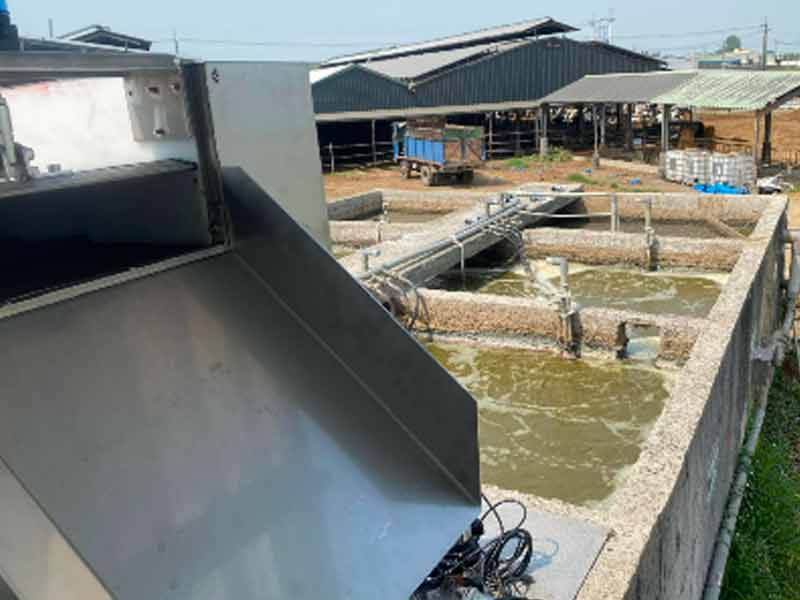
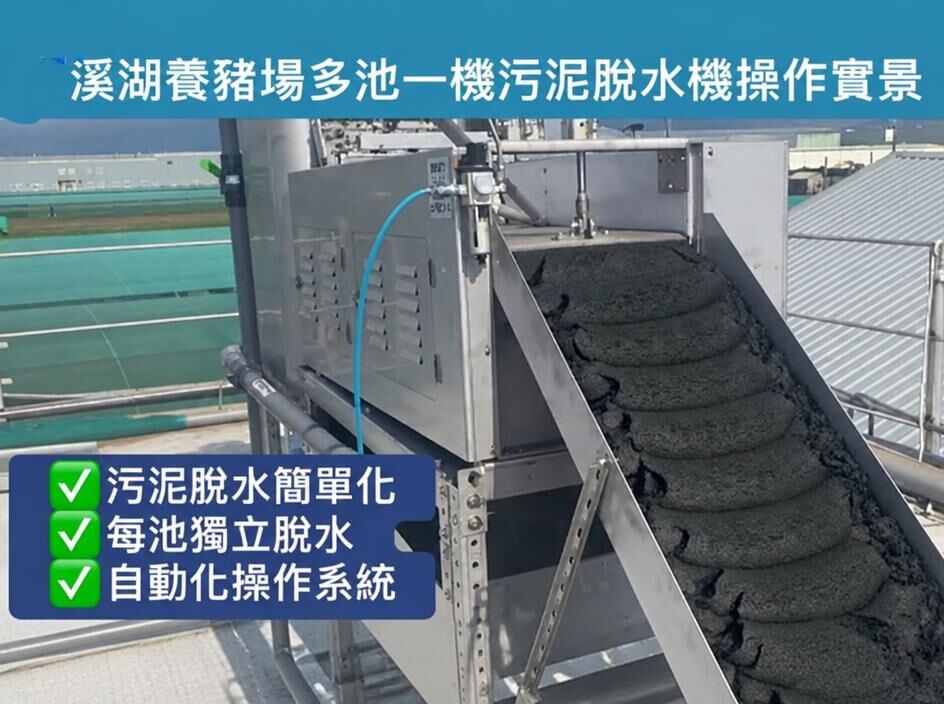
The illustration shows a multi-tank white river pig manure dehydration machine using a single-unit production method and a customer case.
The pressure of wastewater treatment in pig and chicken farms
The wastewater treatment in livestock farms has its own unique characteristics: the waste water is generated daily without interruption due to holidays or equipment maintenance; the organic load and suspended solids concentration are usually much higher than in ordinary domestic sewage; the ammonia nitrogen concentration is also high, and improper treatment can quickly cause a strong odor to escape, affecting the surrounding environment and neighbor relations. Once the wastewater treatment system is shut down, the waste water accumulates very quickly, causing significant pressure on the space on site and on the operators.
Three-stage processing process, each device is in a different position.
The common wastewater treatment processes in Taiwanese livestock farms often involve a combination of several stages, such as solid-liquid separation, anaerobic treatment, and aerobic aeration. Da Ben Ying Co. Ltd.’s equipment mainly serves the following locations:
Solid-liquid separation/sludge dehydration
Separating and reducing the solid matter in sewage from human waste to reduce the load on the downstream treatment pond, see HS500 and HS800.
Purge treatment
Oxygen is supplied to aerobic treatment ponds to assist microorganisms in decomposing organic matter; see sewage aeration equipment for details.
Multiple-pond sludge pumping
Livestock farms usually have multiple treatment ponds, which can be centralized drained using a single unit with multiple pond sludge dehydration systems.
The actual process design still needs to be combined with the overall livestock wastewater treatment system planning; Da Ben Ying Co. Ltd. provides the individual equipment components within the process.
What is saved by solid-liquid separation and sludge dehydration?
Livestock manure contains high water content and is bulky, making it difficult to effectively dry and reduce volume. The frequency and cost of outsourced transportation will increase continuously, and the risk of the sludge pond being overloaded also increases. By compressing the sludge into pellets using dehydration equipment, not only does the number of transportation vehicles decrease, but the pellets after dehydration can be evaluated as compost or other reuse methods in some cases. Whether this is actually feasible depends on the composition of the sludge and the regulations of the local authorities, and relevant procedures must be carried out in accordance with the livestock manure resource utilization policy.
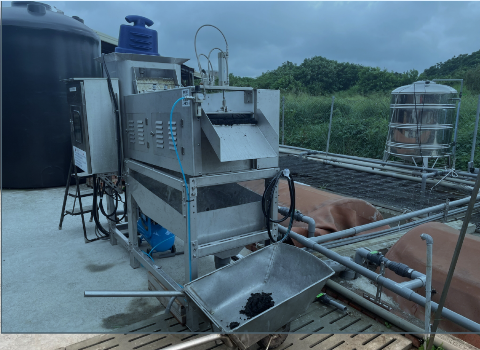
The illustration shows the appearance of a energy-saving sludge dewatering unit device.
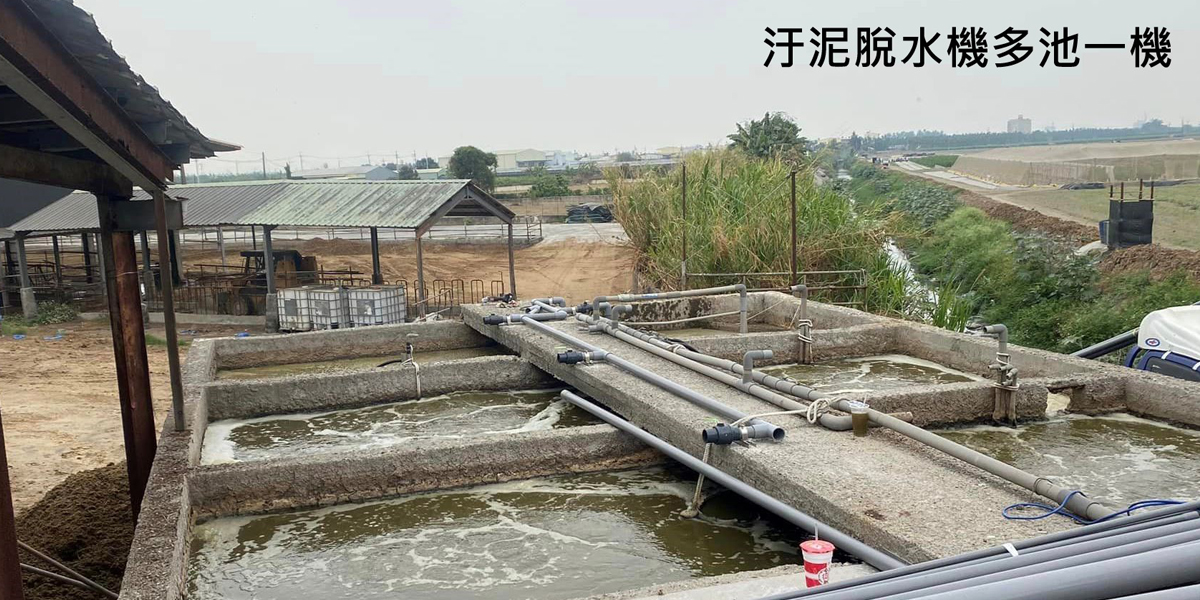
The illustration shows the concept of multi-pool pipeline switching and mud extraction configuration.
Multiple tanks in one unit, eliminating the hassle of manually moving pumps.
Livestock farms usually have multiple manure collection and treatment ponds. The traditional method is to place sedimentation pumps in each pond and manually move them to transport the sludge. The Da Ben Ying Co. Ltd. single-machine multi-pond sludge dewatering system uses a single onshore mud pump paired with pipeline switching, allowing operators to switch between pumping different pond sludge types onshore. The workload and safety risks associated with manually moving the sedimentation pumps are significantly reduced, making it particularly useful for livestock farms with limited human resources.
Ventilation power supply and operational stability
The aeration unit in a livestock wastewater treatment system must operate stably for long periods of time to maintain aerobic treatment effects. The cost of electricity and the stability of the equipment are naturally the two most important concerns for owners. The Da Ben Ying Co. Ltd. Air Ball can be connected to existing piping systems; if there are problems with the aging or damaged rubber air dispersion plates already present on-site, it can be evaluated to replace them directly; see Do Not Block the Air Treatment Equipment for details.
Maintenance tips for aeration tanks
Blockage of the aeration disc or aging of the rubber membrane can easily lead to increased air pressure, increased energy consumption, and uneven dissolved oxygen levels. Before evaluating replacing the blocked aeration equipment, it is recommended to first verify the fan flow rate and piping configuration at the site.
Regulatory, permitting, and resource requirements
The wastewater discharged from livestock farms must comply with the Water Pollution Prevention and Control Law and relevant regulations regarding discharge standards. Depending on the scale of the operation, appropriate emission permits or water pollution control measures must be applied. The resourceization of livestock manure is a recent policy direction; owners are advised to pay attention to relevant announcements from the Ministry of Environmental Protection and consult professional environmental engineering technicians to confirm the applicable regulations and application procedures for their own premises.
Reminder: Installing a single unit device does not guarantee compliance with wastewater standards or environmental inspection; the recycling of sludge and the use of compost must be carried out in accordance with the relevant permits and inspections.
Case studies and original water tests
Pasture farms of different sizes and breeds may have different treatment effects. For detailed case studies, please refer to the Sludge Dewatering Case Study page (related case studies will be updated in the future after obtaining permission).
All illustrations in this page are schematic representations of equipment structure and engineering configuration; they do not represent actual results at specific livestock farms. If you wish to assess the feasibility of a specific project, please arrange for original water testing; actual sedimentation, dosing, and dehydration evaluations will be conducted using samples of fecal sludge from the site.
Common problems and on-site consultations
Provide objective engineering explanations to address the most frequently raised concerns by livestock farm owners when planning solid-liquid separation and sludge dehydration.
Does the sludge dewatering machine in livestock farms need to be operated by a specialized person?
The Dehydration Machine by Da Ben Ying Co. Ltd. is designed for fully automated operation, reducing the need for onsite personnel to maintain the machine; however, it is still recommended to establish a routine inspection and maintenance schedule.
After the livestock wastewater treatment equipment is installed, can it guarantee passing the environmental inspection?
No. The equipment is just a component in the overall processing flow; compliance depends on the overall process design, operation methods, and regular inspections. It is recommended to coordinate with professional environmental engineering technicians to plan the overall system and implement daily operational management.
Is a single-unit multi-pond system suitable for large-scale livestock farms?
Depending on the number of tanks in the site, the spacing between them, and the nature of the sludge, it is recommended to request a site survey. The technician will then assess the specific feasible configuration options.
Can sludge cakes really be used as fertilizer directly?
Whether it is feasible depends on the sludge composition, processing method, and regulations of the local authorities. It is recommended to seek further advice from relevant regulations and testing agencies; it is not advisable to use it directly as fertilizer.
Scheduling a site survey or discussing preliminary water testing
Provides an overview of the in-field processing pool configuration and daily processing volume, helping to assess the feasibility of the unit equipment entry point and configuration.