
High-solubility active water equipment dedicated for stainless steel water towers
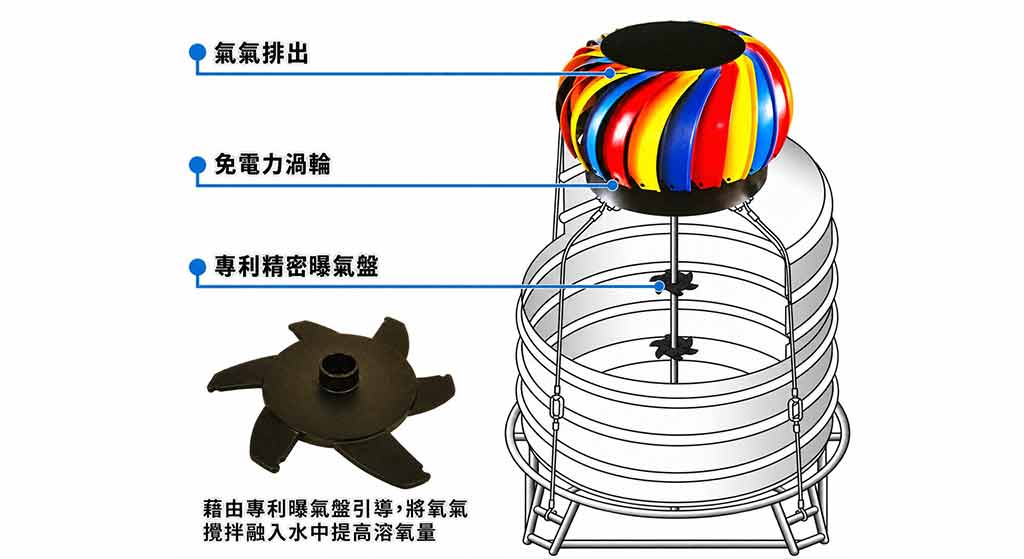
The high-oxygen active water machine equipment specifically designed for stainless steel water towers is a circulating aeration system designed by Da Ben Ying Co. Ltd. for water towers in general residential and community buildings. It improves water quality issues that commonly occur when water towers are left idle for long periods of time by driving negative pressure through a wind turbine-driven aeration disc.
The high-oxygen active water machine designed specifically for stainless steel water towers is a patented water tower treatment system developed by Da Ben Ying Co. Ltd. (Jin Taiyuan series).
Key product features: Operation without electricity: It operates naturally using the flow of water, eliminating the need for electricity consumption. Oxygenation and dechlorination: It can increase the amount of oxygen in the water and help remove chlorine gas, preventing the inhalation of harmful gases when taking a bath or using water. Reduced maintenance of water towers: The official claim is that after installation, the water quality is maintained by activating the water and preventing algae and mosquitoes from growing. This achieves the benefit of maintaining the water tower without cleaning. Improved water quality environment: It can help oxidize heavy metals (such as iron and lead) in the water and prevent bird and insect drowning or the formation of odors.
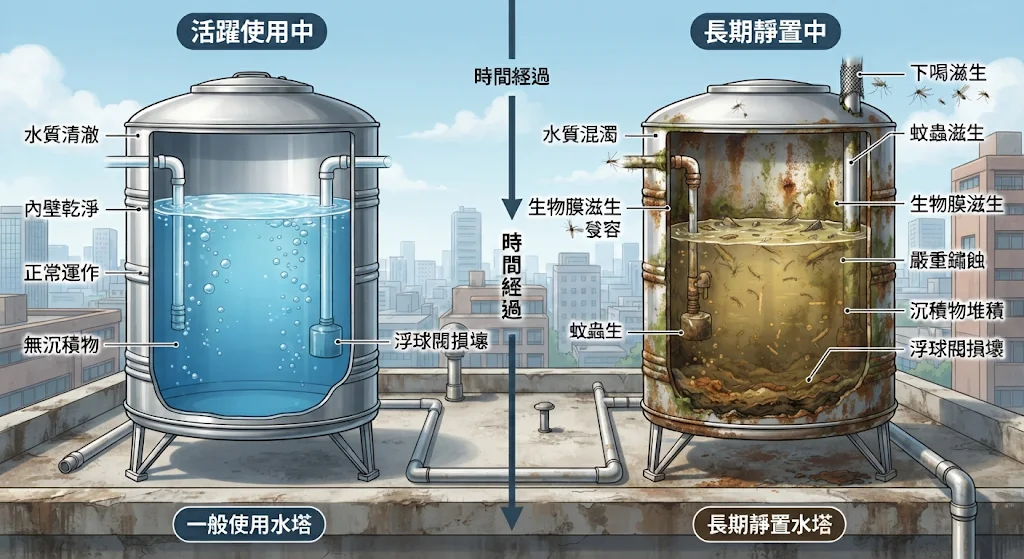
What happens when a water tower is left idle for a long time?
Water towers in ordinary residential and community buildings are mostly in a state of standing water. When water does not flow for a long time, algae and odours can easily grow on the tower walls and bottom, and over time they can also accumulate sediment such as scale. These conditions not only affect the appearance of the water, but also lead to higher frequency of cleaning and maintenance of the tower over time. The design purpose is to improve the water quality brought about by prolonged standing water through continuous circulation aeration.
Wind turbine and negative pressure aeration principle
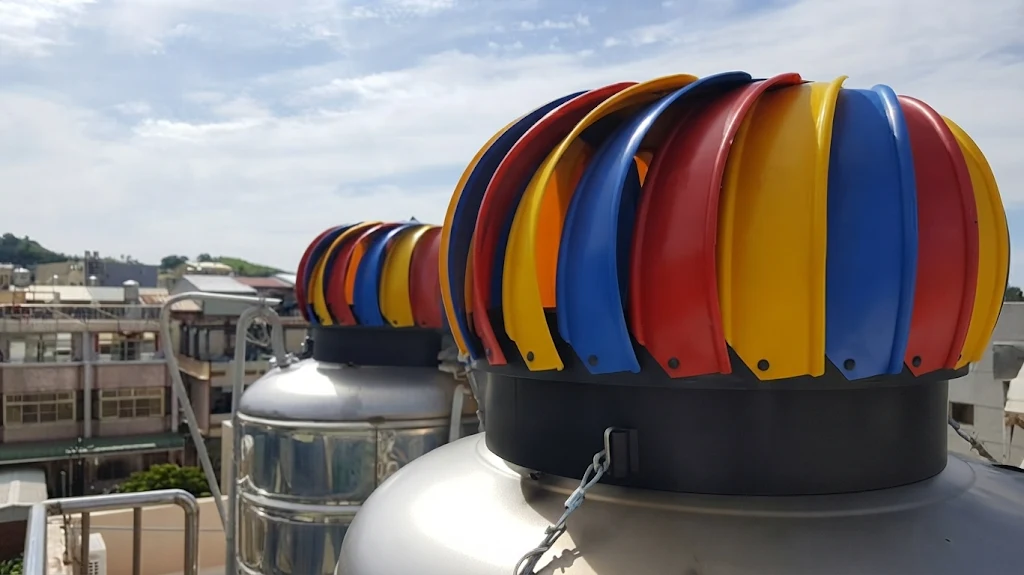
Installed at the top of the water tower, the turbine blades are driven by natural wind to rotate, and then air is introduced into the bottom of the water tower through a connected negative pressure aeration disc. This design does not require external power, operates by wind power, and simultaneously achieves both aeration and oxygenation and water circulation effects. This helps to slow down the water quality changes caused by prolonged stagnation of the water. The actual operational performance will be affected by local wind conditions, the shape of the water tower, and the installation location.
Evaluation of installation of both existing and newly constructed water towers and RC water towers
It can be installed on existing water towers made of stainless steel, FRP, or RC (reinforced concrete), and is also suitable for planning new water towers. Before actual installation, it is recommended that an engineer confirms the opening dimensions of the water tower, the load-bearing capacity of the roof structure, and the surrounding wind conditions, and then clarifies the procedures and responsibilities for waterproofing construction.
How to view the SGS test results
We have commissioned SGS to perform functional testing on specific samples (test number PXBO10001-02). The test results represent the performance of the sample under specific test conditions. Please note that the functional testing report from SGS is a record of the results obtained for specific test items and sample conditions; it is not equivalent to a “drinking water safety certification” and does not represent a substitute for the periodic cleaning and maintenance of water towers. For actual test items and data content, please refer to the full official SGS report provided by Dai Benying.
Daily cleaning and water tower management cannot be neglected.
After installation, the water tower still needs to be regularly cleaned and tested for water quality in accordance with legal regulations and general water hygiene management principles. This function is intended to improve water circulation and aeration, and is not intended to replace the routine cleaning and maintenance of the water tower; homeowners or condominium management boards should maintain the original frequency of water tower cleaning and continue to implement water tower management in accordance with relevant regulations.
Product specifications, warranty, and roof construction
Warranty conditions should be based on the official warranty document (information circulating on the market has stated a 6-year warranty; the official figures still apply to the warranty terms at the time of signing the contract). Installation involves roof hole drilling and waterproofing work; please confirm the scope of waterproofing responsibilities and warranty terms with the construction personnel in advance to avoid any future disputes.
Comparison between installation after and before installation
| Item | Installing a living water machine water tower | Traditional water tower |
|---|---|---|
| Cleaning the water tower | No need to clean; water quality is always fresh and clear | It needs to be cleaned twice a year; otherwise it will cause odors, algae, limescale, and mosquito larvae. |
| Power | No electricity required; the turbine is driven by wind to disperse the swirling air, expelling the hot air; at the same time, the negative pressure in the tank ensures the continuous inflow of fresh air, increasing the dissolved oxygen content. | 1. The electric meter fan is closed tightly, the temperature in the chamber rises, and the nitrogen gas cannot be discharged. 2. The higher the water temperature, the lower the dissolved oxygen content, and the worse the water quality becomes. |
| Except for chlorine | The turbine rotates, the heat is dissipated within the water tower, and chlorine gas does not form trichloroethane; the exhaust gas is also discharged quickly, allowing for the removal of 70% to 100%. | High temperatures in the summer trough cause chlorine gas to react with the pipe wall's trichloroethane, posing a risk to human health. |
| Scale and sediment (Citric acid, calcium phosphate) |
Keep the teapot and water heater pipes bright and clean without any deposits. | White scale deposits often form on the bottom of the teapot and the pipes of the water heater. |
| Iron oxide | The water tower is stirred to increase oxygenation and hydrogenation, and there will be no rust. | There will be a phenomenon of iron scale (yellow rust scale). |
| Drinking water quality | Soft water, slightly alkaline water (PH 7.8 to 8.2), with a sweet and pleasant taste; ideal for brewing tea. | Hard water, slightly acidic |
| Solubility amount | The water purifier has a high hardness and dissolved oxygen level of 8.2 mg/L, indicating that there is both active oxygen (with an oxygen content of 7 mg/L or more) and dissolved oxygen (with an oxygen content of 7 mg/L or less). | Generally, tap water does not have standards for testing the dissolved oxygen content. |
| Water filter | The water quality is super clean, which can extend the lifespan of the core. | Filtration media must be replaced regularly. |
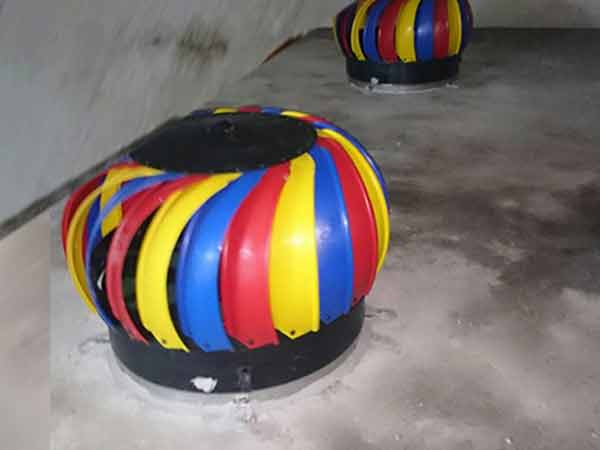
Installation real-world image
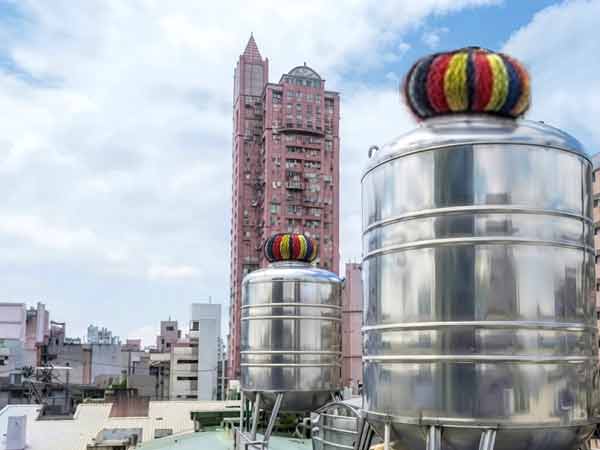
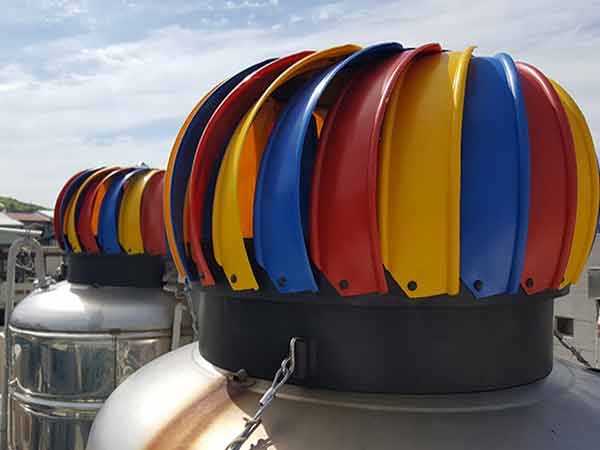
Common problems
1. Can the water from the water tower be directly consumed?
The core function of the stainless steel water tower dedicated high-oxygen active water machine is to "optimize" the water quality rather than "completely sterilize and perform precise filtration."
2. The high-solubility oxygen-generating water machine dedicated for stainless steel water towers has been installed, so the water tower no longer needs to be cleaned?
After installation, the water tower still needs to be cleaned, but the cleaning interval can be "significantly extended".
These high-oxygen water generators mainly inhibit algae and mosquito breeding by increasing dissolved oxygen in the water, and reduce the growth of bacteria and odors. However, they cannot eliminate solid impurities in the water.
Here are the core reasons why you still need to clean even if you have it installed:
Unable to filter out mud and impurities: During the transport of tap water pipes, it is inevitable to carry along mud, rust, silt, or microparticles from community building pipes. These heavy particles naturally settle at the bottom of the water tower, forming a layer of sediment. Oxidized sediment: Active water functions to oxidize heavy metals (such as iron and manganese) in the water, but these oxidized substances become tiny particles and settle at the bottom of the water tower; manual removal is still necessary. Environmental dust accumulation: Even if the water tower has a cover, dust in the air or fine dirt entering through air vents accumulates over time and forms dirt at the bottom.
The main changes after installation
| Adjustment items | Before installation | After installation |
|---|---|---|
| Frequency of cleaning | It is recommended to clean once every six months to one year. | Can be extended to 2 to 3 years for one cleaning (depending on the original water quality in each area) |
| Ease of cleaning | The wall of the tower is prone to slippery biofilm and algae, making it difficult to clean. | The tower wall is relatively clean; when cleaning, you only need to rinse the sediment and sand at the bottom, which saves time and effort. |
Comparison between installation after and before installation
| Item | Installing a living water machine water tower | Traditional water tower |
|---|---|---|
| Cleaning the water tower | No need to clean; water quality is always fresh | It needs to be cleaned twice a year; otherwise it will have an unpleasant odor or algae, limescale, or mosquito larvae. |
| Power | No electricity required; the turbine is driven by wind to expel hot air, while the negative pressure aeration disc inside the bucket mixes the air to increase dissolved oxygen levels. |
|
| Except for chlorine | The turbine rotates, the heat dissipates quickly within the water tower, chlorine gas does not form trichloroethane, and it is discharged quickly, which can discharge 70% to 100%. | In summer, the high temperatures in the barrels cause chlorine gas to evaporate into trichloroethane, which is harmful to the human body. |
| Scale and sediment (Magnesium carbonate, Calcium carbonate) |
Keep the teapot and water heater pipes bright and clean without any deposits. | White scale deposits often form on the bottom of the teapot and the pipes of the water heater. |
| Iron oxide | Water tower aeration and oxygenation through stirring will not cause rust. | There will be iron scale (yellow iron scale) phenomenon. |
| Drinking water quality | Soft water, slightly alkaline water (PH 7.8~8.2) has a sweet and pleasant taste, making it ideal for brewing tea. | Hard water, slightly acidic |
| Solubility amount | After the live water treatment, the dissolved oxygen level is 8.2 mg/L; the trout can survive without any problems (the oxygen level is above 7 mg/L). | Generally, tap water does not have a standard for testing the oxygen content in the water. |
| Water filter | The water quality is clean, which can extend the lifespan of the filter. | Filtration media must be replaced regularly. |
3. Does it need to be plugged in to work?
It does not require electricity, and is completely energy-free operation. High-solubility active water machines designed specifically for stainless steel water towers (such as brands like Dai Ben Ying), usually utilize the natural water pressure and water flow dynamics when tap water is supplied to drive the internal system, performing gas exchange and increasing dissolved oxygen. The core advantage of energy-free operation is zero electricity costs: after installation, it consumes no electricity at all, and long-term use does not increase electricity bills. Installation is extremely safe: Water towers are usually installed in open-air environments on the roof, and the power-free design completely avoids the risks of electrical leakage and short circuits, nor are you afraid of rain and sun during typhoons. No power outages: Even in the event of regional power outages, as long as tap water is supplied normally, the equipment can still operate simultaneously, maintaining the water quality.
4. Can the RC water tower be installed?
The installation can be evaluated, but the water tower opening size, structural conditions, and waterproofing construction method must be confirmed by a technician. It is recommended to first request a site inspection.