
Consider the ventilation unit as part of the overall ventilation system, not as a separate device.
Ventilation equipment for factories and tin sheds
Hot and poorly ventilated factory buildings are often caused by concentrated heat sources, large space volumes, and insufficient ventilation routes. Dai Da Ben Ying Co. Ltd. provides a comprehensive service that ranges from site-specific heat source assessments and wind volume calculations to the installation of rooftop ventilation equipment. It views the ventilation units as an integral part of the overall ventilation system, rather than as a standalone device.
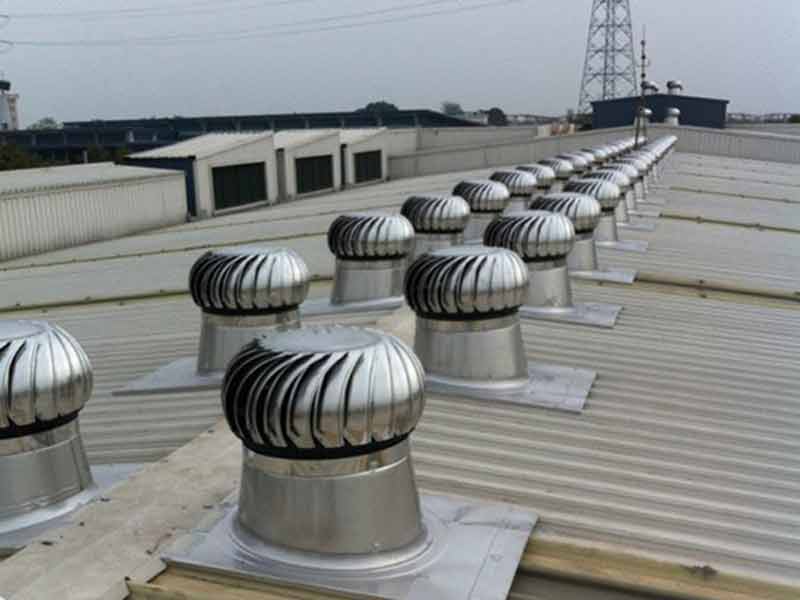
Ventilation equipment for factories and tin sheds
Reasons for the heat and poor ventilation in the factory
Many small and medium-sized factories in Taiwan use tin-roofed buildings; the sun during the summer directly heats the roof; the machinery in the factory also generates heat by circulating air, and the stockpiling of raw materials blocks airflow. The working environment is naturally stifling and unbearable. Poor ventilation not only affects the comfort of employees’ work, but long-term high temperatures can also affect the stability of some equipment or raw materials. These problems often involve multiple factors and require an overall ventilation system plan; installing a single device usually does not solve the problem.
First, determine the heat source, wind direction, space, and ventilation.
Before improving the factory ventilation, it is recommended to first determine the main heat sources in the site (machinery, stoves, roof sunlight), the volume of the factory space, the existing door and window openings and ventilation outlets, and the prevailing local wind direction. This information will directly determine the number of ventilation equipment to be installed, the location of installation, and the planning of ventilation routes. Technician Da Ben Ying Co. Ltd. will confirm these information during the on-site inspection.
The combination of natural force and forced exhaust ventilation
Depending on the size of the plant and the heat source’s intensity, it is possible to combine natural ventilation fans with electric fans, or to mix the two. In areas where heat sources are concentrated and the heat is severe, it is usually recommended to increase the configuration density of electric forced ventilation; in general spaces, the wind power conditions can be combined with natural ventilation fans, balancing energy conservation and ventilation efficiency.
How to estimate wind volume, ventilation frequency, and the number of devices
Industrial ventilation engineering usually uses the “number of air changes” (the number of times the air in a space is replaced per hour) as the design basis, and then estimates the total ventilation volume and number of equipment required accordingly. The actual number of air changes required will vary depending on the industry type, operational requirements, and current regulatory standards. Professional technicians are advised to calculate based on the site conditions rather than relying on general experience to install equipment.
Roof structure, waterproofing, noise, and maintenance
The factory ventilation equipment is installed on the roof. It is necessary to first confirm the load-bearing capacity and feasibility of the existing roof structure. The quality of construction directly affects the waterproof effect and the frequency of subsequent repairs. Additionally, if the factory is located near residential areas or there are specific noise requirements on-site, the equipment selection should also take noise during operation into consideration.
How should construction be arranged so as not to affect production?
If factory ventilation work is not arranged properly, it can easily disrupt the normal production schedule. Da Ben Ying Co. Ltd. will discuss with customers the feasible construction times (such as non-production line operating times, split-shift construction) before the construction begins, in order to minimize interference with production operations; the actual schedule still needs to be coordinated with the site conditions and the customer’s production plan.
Case studies and on-site inspections arrangements
Case studies of improving ventilation in different industry facilities show that the volume of air and the extent of temperature improvement vary depending on the building structure and heating source conditions. For detailed case studies, please refer to the following link.Ventilation engineering casePages, or directly through LINE To request a site survey, a technician will come to the site to assess it.
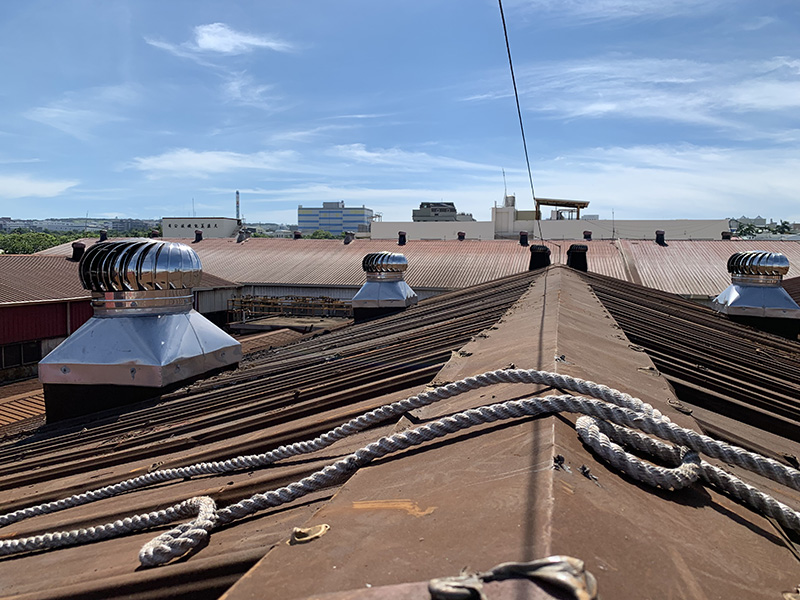
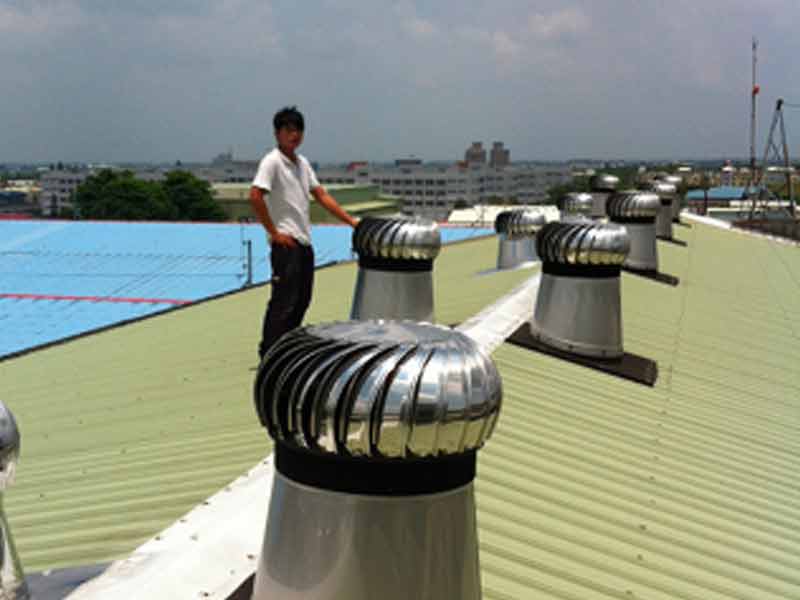
Case Realities
Common Questions (FAQ)
Can factory ventilation equipment really effectively reduce the temperature inside the factory?
Ventilation equipment helps to accelerate the removal of hot air and improve air circulation, but the actual cooling effect will be influenced by multiple factors such as the intensity of the heat source, the building structure and the number of equipment configurations. It is recommended that a technician provide an overall ventilation solution evaluation after conducting an on-site inspection, rather than solely focusing on the specifications of a single equipment.
How many ventilation balls do the factory rooms need?
Based on the volume of the factory space, the intensity of the heat source, and the number of ventilation cycles desired, it is recommended that a professional technician provide a configuration quantity recommendation after conducting an on-site inspection.
Will the ventilation system affect the normal production of the factory?
We will make every effort to schedule construction during periods with less impact on production; the actual schedule will be confirmed in coordination with the project scale and the customer's production plan.
Which industries are suitable for using ventilation equipment?
Manufacturing industries that require room cooling and air circulation can all be evaluated. Actual requirements may vary depending on process characteristics (such as high-temperature operations, chemical use), so it is recommended to combine them withIndustrial applicationsThe information on the page is assessed by technicians on-site.
Real-world operation video demonstration
Movie 01
Movie 02
Film 03
Movie 04
Film 05
Film 06
Film 05
Film 05
Film 05