
Roller-type sludge dewatering machine designed for large-scale factories and sites with high sludge volumes; fully automated continuous operation
HS800 Large-capacity rotary drum sludge dehydration machine
The HS800 is a drum-type sludge dewatering machine designed by Da Ben Ying Co. Ltd. for large-scale factories or sites with high daily sludge volumes. It maintains constant operation with a high efficiency. HS500 The same automated operation logic applies, but the processing capacity is geared towards larger volumes of sludge.
The amount of sludge in large-scale construction sites and the shutdown pressure
Large food processing plants, paper mills, or livestock farms with high daily volumes often generate far more sludge than typical medium-sized or small-sized facilities. The risk of the sludge pond being overloaded is also relatively higher. When upstream processes continue to operate while the sludge cannot be drained and reduced, it can easily lead to sludge overflow, affecting production schedules, and even posing environmental penalty risks. When selecting such sites, in addition to processing capacity, equipment stability and contingency plans after a failure should also be considered.
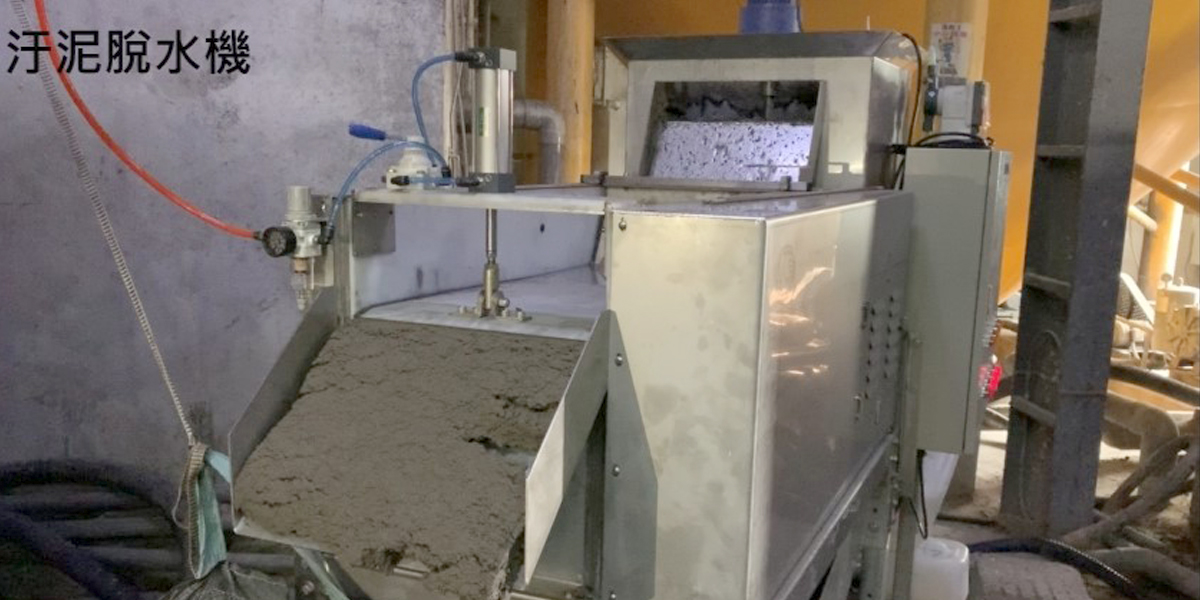
Da Ben Ying Co. Ltd. Roller-type Sludge Dewatering Machine (Real-life Appearance Reference)
Design and positioning of HS800
HS800 continuation HS500 The tumbling bed dehydration structure and fully automated operation logic, as well as the machine size, motor configuration, and processing capacity are designed to handle higher sludge loads and are suitable for sites with higher volume requirements and need long-term continuous operation. If the daily sludge volume is uncertain, upgrading to a larger machine may be necessary. HS800It is recommended to first perform a preliminary water test evaluation or in conjunction with HS500 Make comparisons.
Process flow and automatic operation
The operation process of HS800 is as follows: HS500 Same: The original sludge is automatically mixed with a polymer coagulant to form a gel-like mass, then sent to the tumbling basin for dehydration to complete the solid-liquid separation process. The sludge cake is automatically discharged and the filtered water is returned to the pre-treatment system. The fully automated design also saves on the labor costs of onsite personnel, making it particularly suitable for large-scale sites with continuous production and stable sludge generation.
HS-800 specifications and capability parameters
The following data are for reference purposes only; actual dimensions, weight, and voltage configuration are subject to the specifications of the shipping technical documentation. Processing capacity is subject to the original sludge concentration, solid content, and dosage conditions; the official contract shall be based on the specifications and test reports.
Specifications, production capacity, and original mud conditions
| Model | Length | Width | High | Weight | Power (Motivation) | Processing capacity |
|---|---|---|---|---|---|---|
| HS-800 | 2300 mm | 1100 mm | 2100 mm | 760 kilograms | 2 horsepower | Depending on the original sludge concentration, solid content and dosing conditions *The specifications are also available with a diameter of 400–600 kg/hr (depending on the concentration). |
Important data: The clearing capacity per hour can be specified in tons.
Reminder: Comparison with existing profiles of interview material HS800 The number of tons processed per hour varies from one source to another (approximately 10 Ton/hour, or 15 Different versions such as tons or more). The actual processing capacity is greatly affected by the original sludge concentration, solid content, and dosing conditions. It is recommended that before online operation, the results of the original water test and the numerical values in the official technical specifications be used as a basis, and the test conditions (original sludge concentration, type and amount of the drug, and test time) should be attached.
Comparison of the selection of HS500
| Comparison items | Roll bed type (HS800) | Roll bed type (HS500) |
|---|---|---|
| Positioning | Large-scale factories and high-volume waste water treatment facilities | Small and medium-sized processing volume cases |
| Operation method | Fully automated/td> | Fully automated |
| Applicable Scenarios | Large livestock farms, paper mills, and large food processing plants | Small and medium-sized livestock farms, food processing plants, and general factories |
| Based on the selection criteria | Daily sludge volume, solid content, and site space) | Daily sludge volume, solid content, and site space |
The selection logic for the two models is consistent; the core differences lie in processing capacity and the appropriate scale of the case. It is recommended to decide based on actual sludge generation volume and site conditions; if necessary, a simultaneous evaluation of the suitability of both models can be conducted through raw water testing.
Field inspection, testing, and installation conditions
The nature and volume of sludge in large-scale construction sites vary significantly, so Da Ben Ying Co. Ltd. recommends arranging a site survey first to take samples for raw water testing, after confirming the dehydration effect and the required dosage conditions, a formal equipment specification and piping configuration proposal will then be submitted, while simultaneously confirming that the site space, power supply, and the flow path for temporary storage of the mud cake meet the installation requirements.
Common Questions (FAQ)
Is the HS800 really twice as powerful as the HS500?
Actual processing capacity is affected by the original sludge concentration, solid content ratio, and dosage conditions. It is recommended to use the results of the original water test and the numerical values in the official standard book as a reference.
What kind of case is best suited to use the HS800 directly, rather than using two HS500 units?
The choice of configuration depends on a comprehensive evaluation of the site space, power supply conditions, manpower allocation, and subsequent maintenance requirements. Each configuration has its advantages and disadvantages; it is recommended to discuss the choice with the business window before making a decision.
Can the HS800 be used with a multi-pool system?
Yes. For large-scale cases with a large number of sludge ponds, it can be combined withOne machine for multiple sludge dehydration systemsThe sludge is collected and then sent to a centralized treatment facility. HS800 Unified handling.
Are paper mills and large livestock farms suitable for HS800?
The amount of sludge in these types of industries is usually higher, so it is recommended to refer to the following:Treatment of paper mill wastewater或Livestock wastewater treatmentPage, and apply for original water testing to confirm actual suitability.
Specifications
| Model | Length | Width | High | Weight | Power (Motivation) | Processing capacity (kg/hr) |
|---|---|---|---|---|---|---|
| HS-600 | 1520 mm | 780 mm | 2100 mm | 570 kilograms | 2 horsepower | 220 kg/hr 380 kg/hr 440 kg/hr |
| HS-800 | 2300 mm | 1100 mm | 2100 mm | 760 kilograms | 2 horsepower | 770 kg/hr 980 kg/hr 1140 kg/hr. |
Sludge treatment capacity
| Model | Input capacity (raw sludge) | Production (dehydrated biscuits) |
|---|---|---|
| HS-300 | 200 - 300 kg/hour (depending on the original sludge concentration)[cite: 2] | 40 - 60 kg/hour (depending on the sludge properties)[cite: 2] |
| HS-500 | 400 - 600 kg/hour (depending on the original sludge concentration)[cite: 2] | 80 - 120 kg/hour (depending on the sludge properties)[cite: 2] |
Real-world operation video demonstration
The following includes six real-world operation videos that demonstrate the operation of the roller bed mechanism, solid-liquid separation, and mud cake discharge in real-time.
Movie 01
Movie 02
Film 03
Movie 04
Film 05
Film 06
Next step: Overview of Sludge Dewatering Equipment | HS500 | Multi-pool system for one machine | Treatment of paper mill wastewater | Plastic recycling wastewater treatment |For immediate quote please LINE Question