
Solid-liquid separation and sludge dehydration of wastewater from food processing plants
The process wastewater and cleaning wastewater from food processing plants often contain high levels of grease and suspended solids (SS). The water volume and quality also fluctuate significantly depending on production schedules. Da Ben Ying Co. Ltd. provides configuration recommendations for aeration and sludge dewatering equipment to help food manufacturers effectively remove suspended solids and ensure a stable processing process.
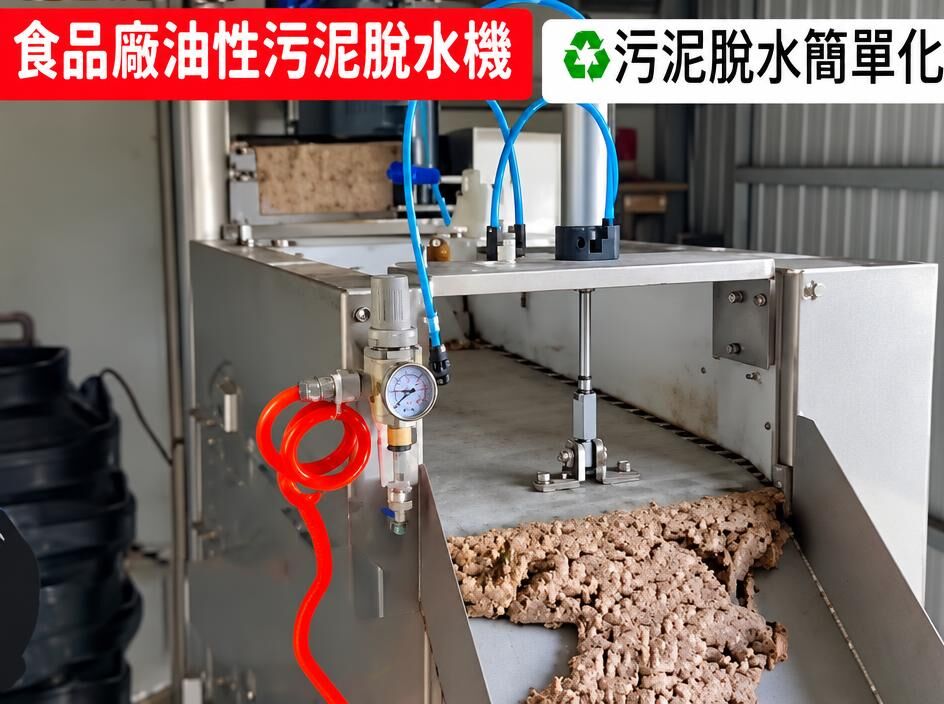
The illustration shows a schematic layout of the solid-liquid separation and sludge dehydration equipment for wastewater from food factories.
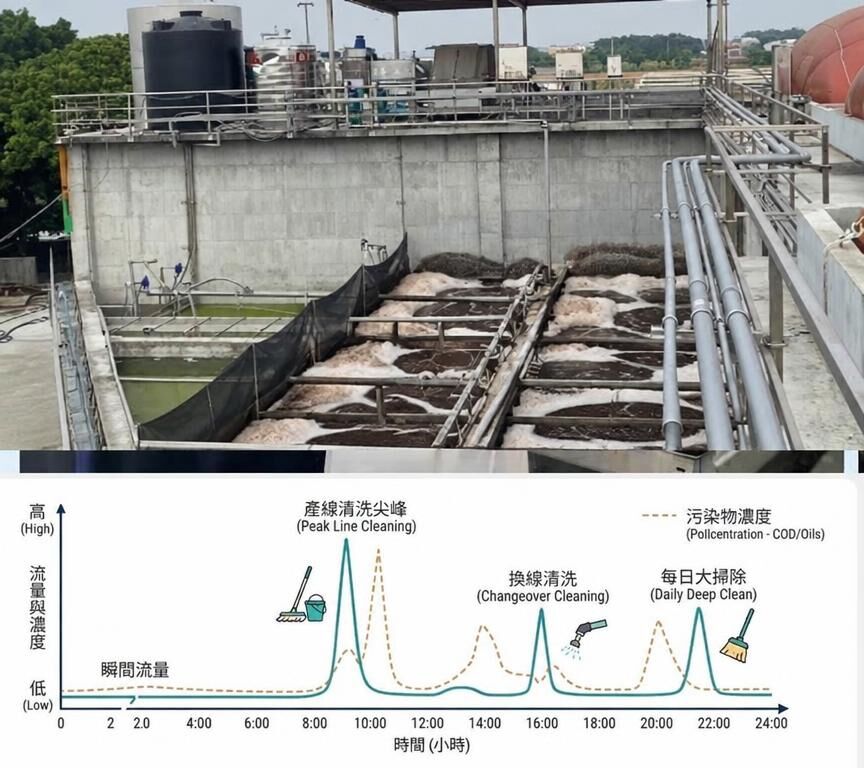
Fluctuations in process flow and cleaning wastewater
The wastewater sources in the food processing industry are quite diverse—raw material cleaning water, process residual liquid, and equipment cleaning water are all included. The water quality and volume often fluctuate significantly depending on the production schedule. For example, the instantaneous water volume during line cleaning may be significantly higher than usual; the concentration of grease and suspended solids also varies significantly depending on the product type. This variability must be taken into account when designing the wastewater treatment system for food plants.
Order of processing for oil and fat, SS, BOD/COD
The treatment of food waste water usually follows a proper sequence based on the characteristics of the pollutants:
1. Oil and fat separation—First, a separator removes most of the oil to prevent it from clogging the downstream biological treatment unit or inhibiting microbial activity.
2. Suspended solid (SS) interception—By methods such as screening, sedimentation, or chemical coagulation, the concentration of suspended solids in water is reduced.
3. Biological treatment (BOD/COD removal) – using aeration to supply dissolved oxygen, allowing aerobic microorganisms to break down organic pollutants in the water.
4. Sludge dehydration—reducing the amount of sludge produced by biological treatment and pre-treatment.
The degassing and sludge dewatering equipment of Da Ben Ying Co. Ltd. is mainly suitable for the third and fourth stages.
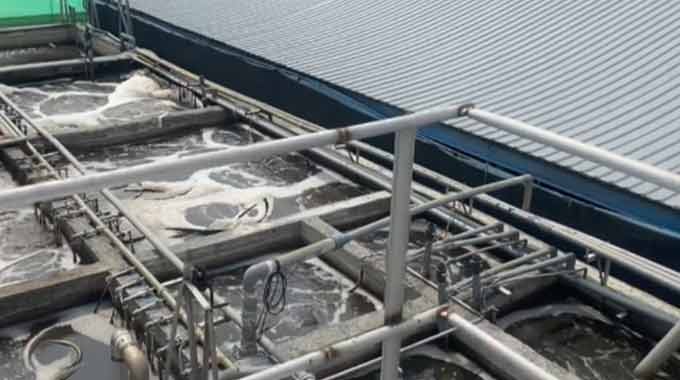
Order of processing for oil and fat, SS, BOD/COD
Three-stage processing process, each device is in a different position.
Pre-processing and blending are more important than you might think.
The water quality of food processing plant wastewater fluctuates greatly. It is recommended to install a mixing tank before biological treatment to mix and homogenize wastewater from different time periods and batches, reducing the impact of sudden high-concentration loads on the downstream biological treatment system. If pretreatment and mixing are not done properly, this will directly reflect on the actual performance of the downstream aeration and dehydration equipment.
Location of aeration and sludge dewatering equipment
The aeration equipment is responsible for supplying dissolved oxygen in the biological treatment pond to maintain the efficiency of microbial decomposition of organic matter. For more details, see sewage aeration equipment. Sludge generated after biological treatment can be reduced through dehydration using the HS500 or HS800 system, which reduces the cost of external transportation. For cases where wastewater contains a high level of oil, it is recommended to first confirm the suitability of the dehydration equipment or to combine it with additional pre-treatment measures.
Pharmaceutical vial experiments and clay evaluation
The oil content and SS characteristics in food wastewater directly affect the formulation and dosage of dehydration and additive treatment. Da Ben Ying Co. Ltd. recommends that before a formal quote is issued, samples of the raw water or raw sludge from the site be sent back to the laboratory for flask-addition drug testing to evaluate the appropriate drug type, dosage, and dehydration effect. Sludge with a high oil content usually has a greater variation in dehydration effect, requiring prior testing to confirm.
Hygiene, Odor, and Operation Maintenance
Food factories require higher standards for hygiene and odor control in wastewater treatment areas than other factories. Proper ventilation and cleaning routes should be planned, and aeration and dehydration equipment should be regularly maintained to prevent odors from spreading due to equipment failure or improper maintenance.
Case study and original water sampling
The characteristics of wastewater from different types of food processing (meat processing, beverage production, baked goods, etc.) vary greatly, and the actual treatment effect must be evaluated on a case-by-case basis. For detailed case studies, please refer to the Sludge Dewatering Case Studies page.
Common problems and on-site consultations
For food processing types (meat processing, beverage production, baked goods, etc.), the most frequently asked questions regarding the waste water characteristics of solid-liquid separation and sludge dehydration are provided with objective engineering explanations.
Do food factory sludge dewatering machines always have to undergo a preliminary water test?
It is strongly recommended to do so. The oil content and SS content of food wastewater vary greatly; the dosage formula and the dehydration effect all need to be confirmed through test using raw water; simply applying the standard specifications could easily lead to discrepancies.
Can highly oily sludge be directly treated with a dehydrator?
Sludge with a high oil content has a greater variation in dehydration efficiency. It is recommended to first conduct a test using raw water to evaluate the effect, and if necessary, combine it with pre-treatment measures to reduce the oil content before dehydration.
Will the aeration equipment in the food factory be clogged with grease?
Fatty substances may indeed affect the efficiency of aeration equipment. It is recommended to first reduce the oil concentration through pre-treatment facilities, and to regularly maintain the aeration equipment to reduce the risk of blockage.
How often do I need to do a preliminary water test?
If there are significant changes in the process or raw material source, it is recommended to reevaluate the water quality characteristics. Generally speaking, the test results from the initial equipment selection can serve as a long-term reference, but it is still recommended to regularly monitor water quality changes.
Next step: HS500 | HS800 | Sewage aeration equipment | Slaughterhouse/Electric slaughterhouse wastewater treatment | LINE Request for original water testing inquiry